Monday, August 21, 2017

Oyster Farm to Farm Table on the Farm


What a treat! You can eat oysters pulled right out of the water, shucked, and served on a farm table en plein air. The experience is organized by Matunuck Oyster Bar in Rhode Island, a restaurant that has deservedly earned a fine reputation for locally sourced food. Its owner, Parry Raso is fundamentally a farmer. While developing his restaurant to serve only foods produced locally, he has also been cultivating farmland and oyster beds on land and sea nearby.

As an alternative to simply eating in a regular restaurant, Perry has cleverly created a "Land and Sea" program to lure curious diners to his farm. Limited to only about 30 lucky people, Perry explains to the group how oyster seeding works, followed by a guided walk through the land crop rows.


The vegetable tour concludes on the lawn, which spreads out below the 300 year old wooden farmhouse where Perry makes his home. It is perched on a spot overlooking crops in the foreground and estuary oyster beds beyond. The educational part ends and the eating part begins at a table with fresh chilled oysters, waiting to be tasted.

Oyster bar with a choice of savory sauces
After the oysters, guests are seated at a long table dressed in crisp white linen and decorated with vases of sunflowers. (Not only the guests love the sunflowers; bees do too).

Sunflower on the Table - with bee
A guest chef prepares dinner - different chefs rotate through. This week, the chef was Rick Allaire of Metacom Kitchen in Warren, Rhode Island. The main course on his menu was a delicious Striped Bass with a peppery seaweed rub. Dessert included a yummy limoncello yogurt topped by freeze dried raspberries.

As if the whole experience is not delicious and interesting enough, it's an added bonus to eat family style. Interesting people make the dinner even better.


Friday, July 28, 2017

Pencil a Poem for the Poetry Box


A little house, like a bird house on a stick, popped up on a lawn that I frequently pass. The lawn belongs to Salve Regina University in Newport, Rhode Island. This particular spot is along the Cliff Walk, facing the ocean.  A little sign staked into the ground a few feet in front of the box beckons you to open the door.


Inside the box is a poem and a little spiral notebook with a pencil tied to a string, dangling from it. Passersby are invited to write something. They do. Now that I know about the poetry box, I notice people who are curious just like me, walking up to it, opening the tiny door, and spending a few moments with it. Once you understand the power of the poetry box, you walk away with a smile on your face.


Just as your smile begins to fade, another poetry box appears on the path. 


Saturday, March 18, 2017

Medellin Street Art - Muy Muy Bueno!


Riding on Medellin's public transit system is delightful. It's clean, safe, and many of the cars are new. But my favorite part is looking out the window. The street murals are gorgeous. They are huge. They wind around corners. They are bright. They are clever. And they are a constant reminder that creativity is a gift that enriches everyone who sees it.


Thursday, March 16, 2017

Philadelphia Flower Show - The BEST EVENT in the WORLD


For a mind blowing, nose heaven, eye popping experience, the Philadelphia Flower Show is in rarefied air. I went to it this past weekend. It will continue until March 19. I'm not exaggerating. According to its website, the Philadelphia Flower Show has been named the best event in the world by the International Festivals and Events Association.
https://theflowershow.com/

It beat out the Kentucky Derby Festival, the Tournament of Roses Parade and the Indianapolis 500 Festival. The show is run by the Pennsylvania Horticultural Society and they have been doing it since 1829. It is the largest and longest running in the country. They estimate that 250,000 people visit every year. I can attest. It's crowded in the Philadelphia Convention Center.

This year's theme is Holland. What fun to see exhibits of flower-laden bicycles, beer gardens and even a giant windmill.


This is for our dear Dutch friend, Sasha!

Even the trains are Dutch, with tulips decorating the tracks
 When we had enough of the flower show, we went right through the pedestrian walkway to the Reading Terminal Market. We stopped at Shibumi Farms and got some Hen of the Woods mushrooms (thank you, Sandrine). Later, I googled these delicacies and learned that Memorial Sloan-Kettering's research suggests that they contain substances which stimulate immune system cells. Even better.


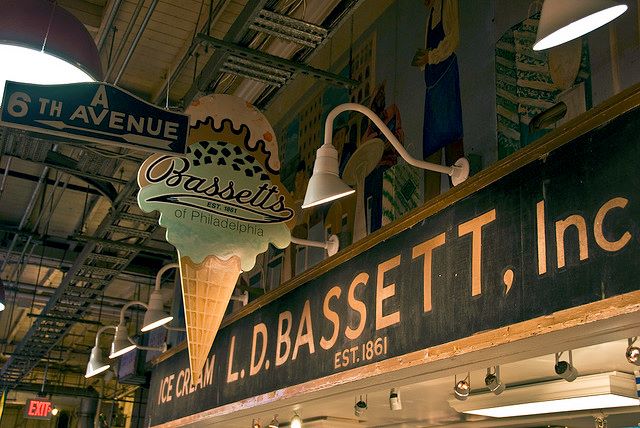
The yummy, creamy ice cream from Bassett's, however, does not offer such healthy properties. But, boy, is it delicious.


Saturday, February 4, 2017

MOLA: When Used Clothing Turns to Treasure


I got curious about Mola when I saw a gorgeous handbag for sale in a shop in Cartagena. A bit too pricey for my taste, I never did forget about it. About a year later, I went back to Colombia -- this time to Bogota -- and spied some Mola. Happy me. (And I bought a Mola bag. Yay).

The complicated embroidery technique called Mola was developed by the Gunadule women of Panama and Colombia. Mola is believed to be about 150 years old and derived from body-painting practices. The women sew scraps of brightly colored cloths together by hand and then cut the strips into intricate designs. The more layers and colors, the more valuable. Note the tiny stitches in the photograph above.

The Molas are worn on blouses by the Gunadules.


And -- here's where it gets interesting for handicraft appreciators. When the women get tired of their blouses, they cut them up and sell the cloth. The Mola cloths are sought after for creating decorative pieces for sale. Mola pieces are incorporated into belts, purses, pillows, bed quilts and wall hangings.

Upscale handbag shops sell leather bags that were designed around the Mola piece.

Leather handbag with Mola insets. Birds' heads visible on the shoulder strap and only suggested in the center panel inset

The Gold Museum in Bogota developed an exhibit to showcase Molas.


Some kind of wildlife is often suggested by the patterns. The designs have evolved so that the Molas makers now incorporate contemporary themes and icons such as celebrities, consumer products and superheroes.
Spiderman Mola on a poster advertising the exposition at the Gold Museum in Bogota


Friday, January 6, 2017

Worshipping Deep Underground in ZIpaquira's Salt Cathedral


In an old salt mine in Colombia's countryside about one hour from Bogota, lies a full Roman Catholic Cathedral. Zipaquira's Salt Cathedral was created by clearing out 250,000 tons of salt and building an entire cathedral that can hold 8500 people.

For a sense of perspective, the cross is the world's largest in an underground church.

Shadowy figure in the lower foreground is a person photographing the giant cross

To get to the cathedral, a wide, well-ventilated path slowly ramps downward, until the base level of 200 meters (656 feet) is reached. Along the way, there are side chapels carved into the walls, each signifying one of the twelve stations of the cross.


And naturally, there is a gift shop (practically a shopping center - offering souvenirs along with jewelry and more) and food.


Palm Trees and Willys Jeeps in Colombia's Cocora Valley


Colombia's Corcora Valley is a startling sight. Its green rolling hills make you feel like you are in Switzerland except for one thing. There are palm trees popped up all over the hillsides. The exceptionally tall species of palm (the largest palm in the world) is known as Wax Palm and is unique in its presence so far above sea level and  cooler climate. Corcora Valley (in Spanish, Valle de Cocora) is situated in Colombia's Coffee Country region. UNESCO has designated Colombia's entire coffee region as a World Heritage site. It is gorgeous. 

Coffee Beans

The Corcora Valley looks much like the surrounding area but for its palms. The majestic trees and the hills around them were granted government protection by being designated as a national park in 1985. The country named the Wax Palm as the national tree, in the hopes of preserving it from total destruction.  Until that measure in 1985, it had been the practice of thousands of Colombians to descend on the area just before Palm Sunday to rip at the trees for their leaves. The tree trunks are scarred and weakened, and many have fallen to the ground. 


Now a protected area, the park has been developed for hiking and horse trails. 


A popular way of traveling by road through the park is on Willys Jeeps. Originally brought to the area in the 1950s as World War II surplus, they were used to transport coffee crops, pigs, people, whatever, through the tough terrain of the coffee country. They still are. But as tourism grows and better roads are built, the Jeeps are also used to shuttle tourists from Valle de Cocora trailheads to the nearby town of Salento. 


Unlikely you'd see this in the USA, but people freely ride on the Jeep's back platform, hanging onto the roof as the Jeep winds through the gorgeous road.